
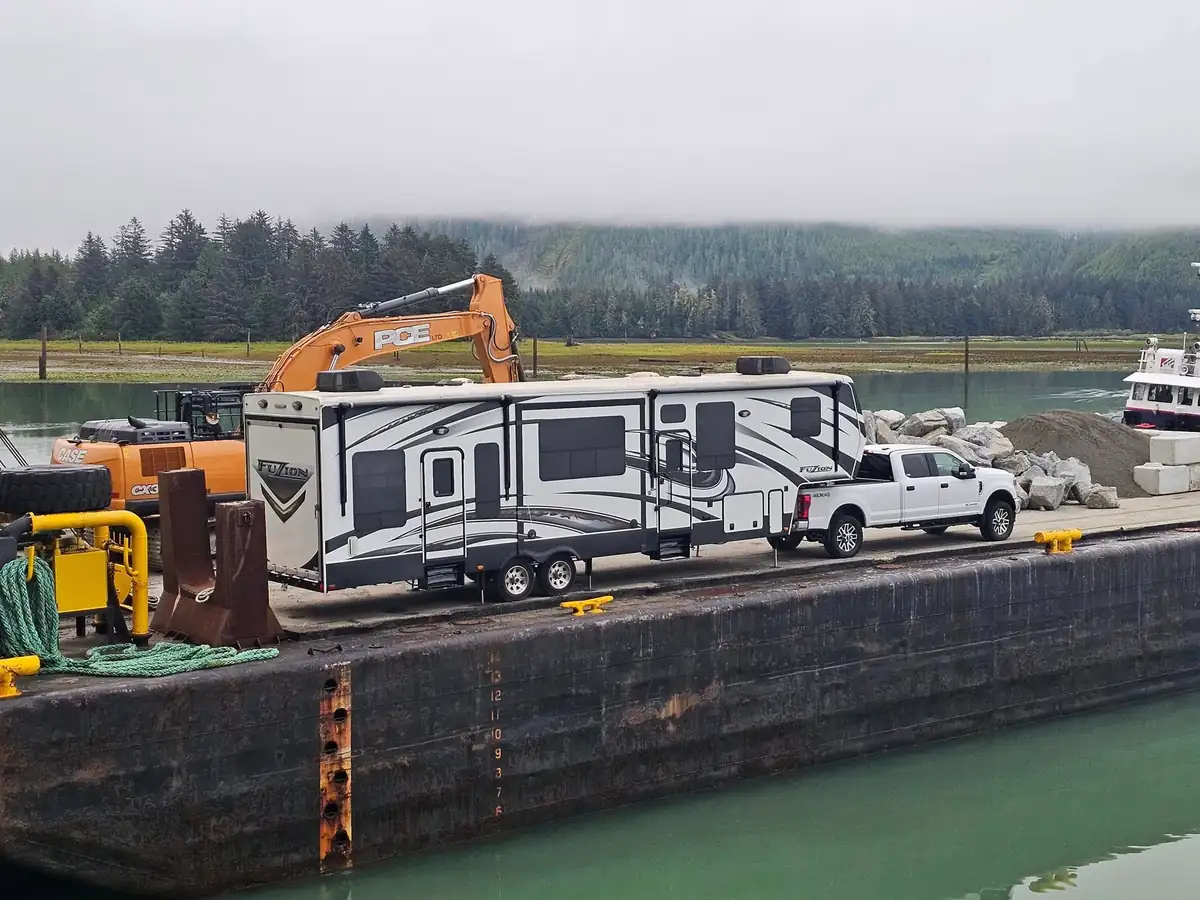
Planning a barge-access excavation project
What goes into running excavators on a site with no road in, based on PCE’s barge work at Rivers Inlet on the central coast.
Start with the landing
A barge needs somewhere to put its ramp down. Before anything else, find out where equipment can come ashore, what the tides do there, and what the route is from the landing to the work.
Build the equipment list once
- Excavators sized for the heaviest pick and the tightest access
- Every attachment the job might need: buckets, thumb, breaker, compaction
- Trucks to move material between the landing and the work
- Fuel, filters, hoses, wear parts and tools
- Site office and crew accommodation
Anything left behind costs another barge trip or a long wait.
Plan the people
Crews on remote jobs live on site for weeks. Accommodation, food, communication and a way out in an emergency need to be planned before the barge leaves. Helicopter and floatplane support can move people and light loads in between.
Protect the site
Coastal sites are often environmentally sensitive. Spill kits, sediment control and a plan for waste and fuel go on the barge with everything else.
Last reviewed October 2026. General information only, not engineering or legal advice.
Got a big job coming up?
Tell us where it is, what needs to come out of the ground and when. We’ll tell you how we would do it.