
Civil works and underground utilities
Subdivisions, roadwork and large-scale site development, from the ground up — with decades of experience working alongside major contractors on complex infrastructure.
What this covers
- Subdivision and site servicing excavation
- Roadwork, subgrade preparation and compaction
- Sewer and storm pipe installation and repair
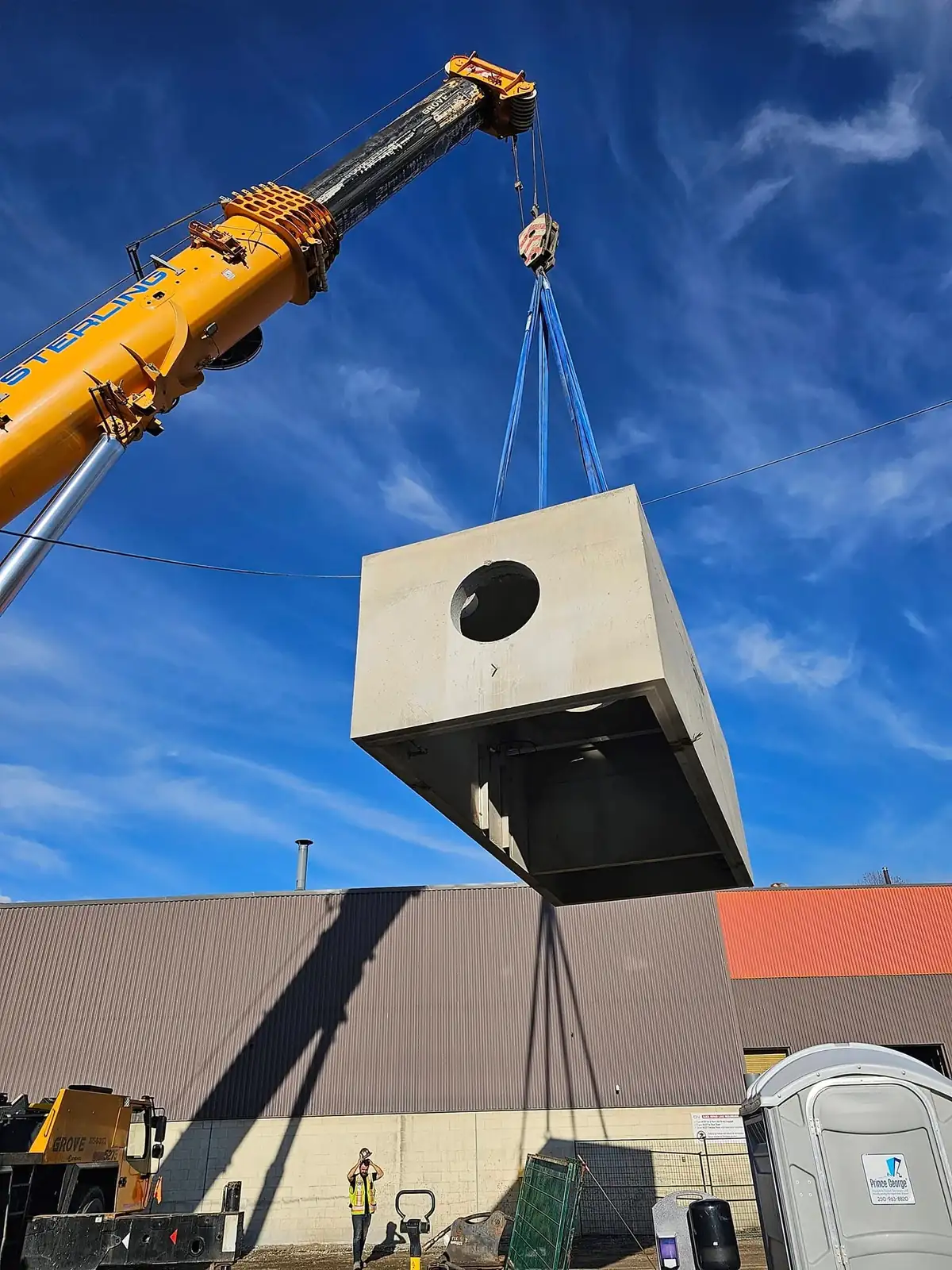
- Precast manholes and vaults set with a crane
- Water main repair and valve replacement
- Trench shoring boxes and confined space entry
- Steel road plates to keep traffic moving over open trenches
Underground utility work happens in deep, narrow trenches next to traffic, existing services and buildings. PCE crews work inside trench shoring boxes, and operators hold up-to-date certifications in areas such as confined space entry.
On larger civil jobs PCE supplies the excavation crew and equipment that the prime contractor or utility installer needs: digging and shoring the trench, bedding and backfilling pipe, setting structures and restoring the surface.
This company has got to be one of the best companies I’ve ever had the pleasure working with and for. They have probably the best operators in the industry and have been mentored and managed by one of the most experienced and talented man that I’ve ever met in the construction world. It’s always a pleasure to work around and be around Norm Svennson and his team.
Smaller jobs in this line
Common questions
Do I need to call BC 1 Call before digging?
Before excavating or drilling with powered equipment, the location of all underground utilities must be accurately determined (OHS Regulation section 20.79). WorkSafeBC says contacting BC 1 Call is the best way to find out what is buried. Members ask for 3 working days’ notice, and online (E-ticket) locate requests are free.
When does a trench need shoring?
Under section 20.81 of the OHS Regulation, before a worker enters an excavation over 1.2 m deep, the sides must be sloped, benched or supported, for example with trench boxes or shoring. PCE crews work inside trench shoring boxes on underground utility work.
When is a WorkSafeBC Notice of Project needed?
WorkSafeBC must receive a Notice of Project at least 24 hours before work starts when, among other triggers, a worker may enter a trench over 30 m long or an excavation (other than a trench) over 1.2 m deep.
Can you work in a city street?
Yes, with the right permits in place. Work in a city road needs the municipality’s permission, for example Surrey’s City Road and Right-of-Way Use Permit, and work on a provincial highway needs a highway works permit from the Ministry of Transportation and Transit. PCE uses steel road plates to keep traffic moving over open trenches.
Rules summarized here were checked in October 2026. The guides listed alongside link each one to its official source. General information, not legal advice.
Related projects
Sewer, storm and deep utility installation
Underground work in trench boxes: sewer pipe replacement, precast manholes and vaults set by crane, and pipe work beside live roads.
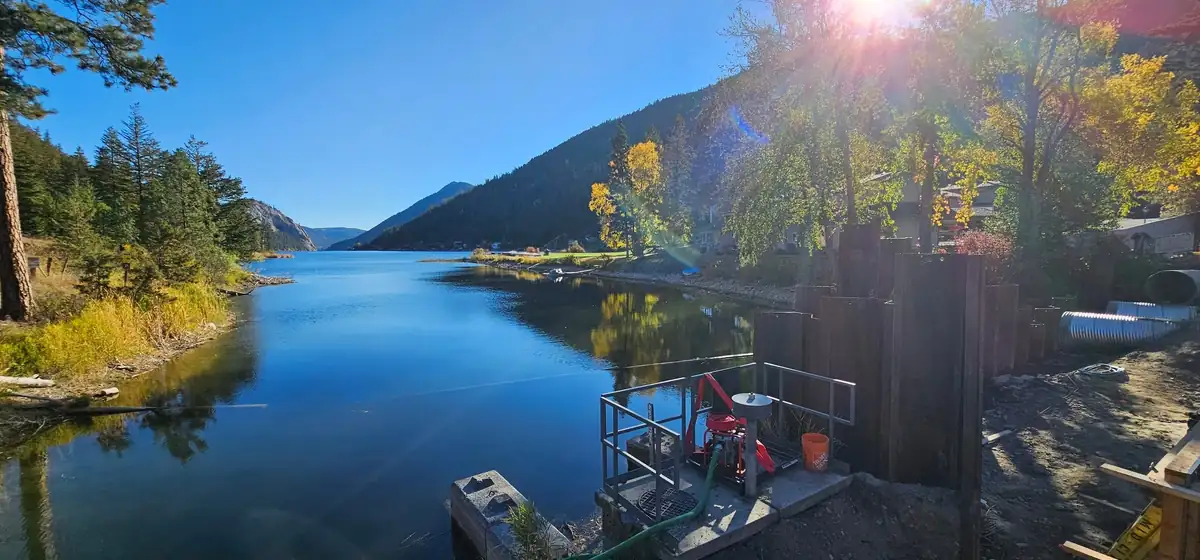
Paul Lake dam upgrade
Excavation for Matcon Environmental on the dam upgrade at the outlet of Paul Lake, northeast of Kamloops, beside a live creek.
Got a big job coming up?
Tell us where it is, what needs to come out of the ground and when. We’ll tell you how we would do it.