
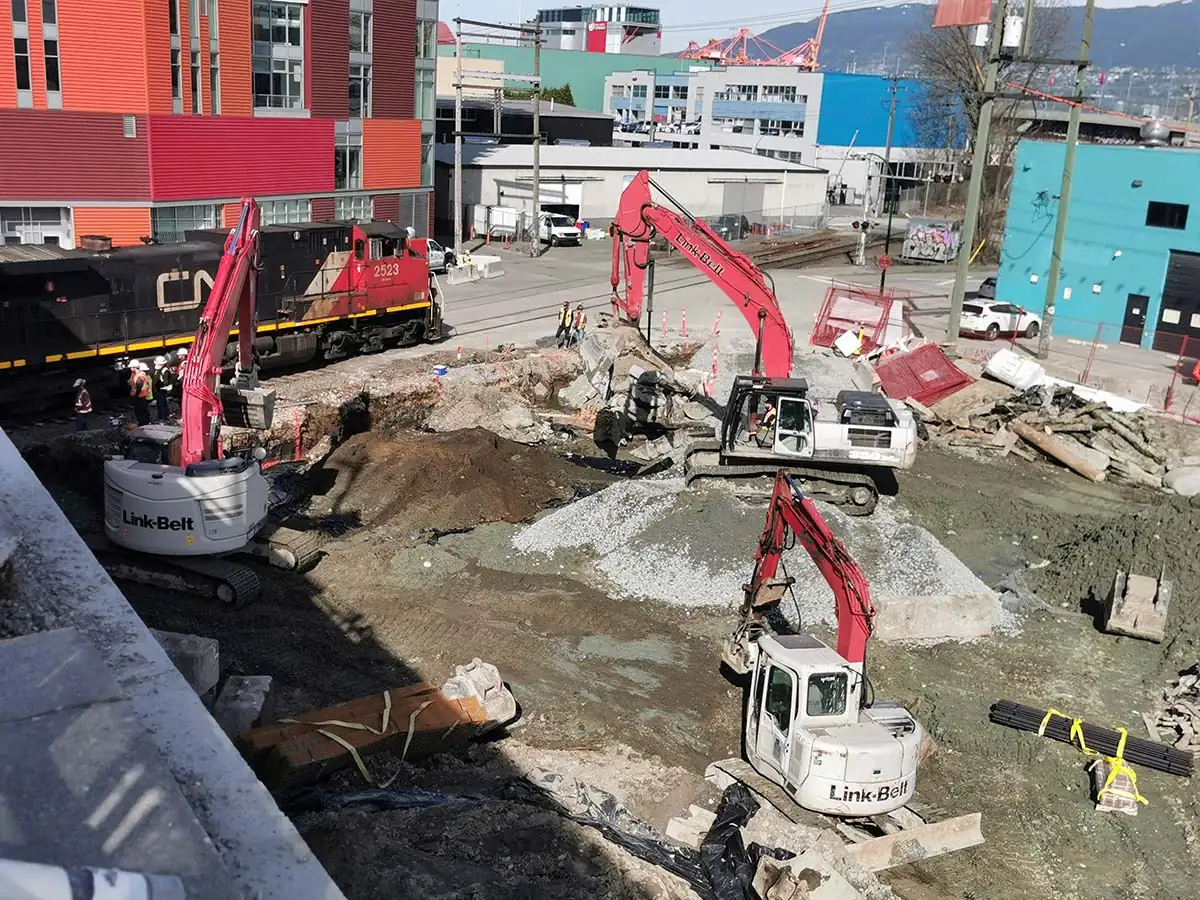
Commercial and high-rise excavation
From high-rise developments to large contractor partnerships, PCE provides excavation for complex commercial and industrial projects — on tight urban sites, beside shoring walls and inside existing buildings.
What this covers
- Bulk excavation for underground parking and foundations
- Detailed excavation for footings, pits, manholes and services at the bottom of the hole
- Working inside shored excavations alongside shoring and piling contractors
- Deep, limited-access excavation inside existing buildings with compact equipment
- Slab and floor removal, recompaction and levelling for new slabs
- Loading out and disposal of soil, concrete and steel
Commercial excavation is about production and coordination. The general contractor needs the hole dug to grade, the shoring trades need room to work, and the trucks need to keep moving. PCE’s operators are trusted by leading construction companies to meet demanding timelines while holding precision and safety on site.
With 17 excavators, PCE can put the right size of machine on each part of the job: large excavators for bulk digging and truck loading, compact machines for detail work, and machines that can be lowered in by crane when there is no other way down.
PCE excavated my warehouse floor in preparation for a new slab. They also recompacted and leveled the floor, and disposed of all the concrete and steel in an efficient, timely manor. We had a tight deadline, as we needed to get the shop back up and running as soon as possible. PCE used proper safety measures and communicated well with my team. I would highly recommend them.
Common questions
What is the difference between bulk and detailed excavation?
Bulk (or mass) excavation removes the main volume of material, such as the hole for an underground parkade or a foundation, and is driven by cubic metres per day and truck turnaround. Detailed excavation is the precise work that follows at the bottom of the hole: footings, pile caps, pits, grade beams and services. PCE does both.
When does a deep excavation in BC need an engineer?
Under section 20.78 of the OHS Regulation, a qualified registered professional’s written instructions are required if an excavation is more than 6 m deep, a structure is adjacent, vibration or hydrostatic pressure could cause hazardous ground movement, or the ground slopes away steeper than 3:1. Support structures need a professional engineer’s instructions. Some cities add their own review: the City of Langley requires an independent review of excavation and shoring plans 3 m or deeper on non-single-family projects.
Can groundwater from the excavation go down the drain?
Not without permission. Metro Vancouver’s Sewer Use Bylaw No. 299 does not allow groundwater or stormwater to be discharged to the sewer without a Waste Discharge Permit, a Trucked Liquid Waste Authorization or an Order, and some cities, such as Richmond, require their own permit for discharges to the storm sewer.
Who looks after the soil that comes out?
PCE loads out excavated material and handles soil disposal with full documentation. If the site has a current or past commercial or industrial use listed in Schedule 2 of the Contaminated Sites Regulation, a qualified professional may need to submit a Soil Relocation Notification at least one week before soil leaves the site.
Can you excavate inside an existing building?
Yes. PCE uses compact equipment for limited-access excavation inside buildings, including a 4 m deep excavation inside a building for TriCity Plumbing.
Rules summarized here were checked in October 2026. The guides listed alongside link each one to its official source. General information, not legal advice.
Related projects
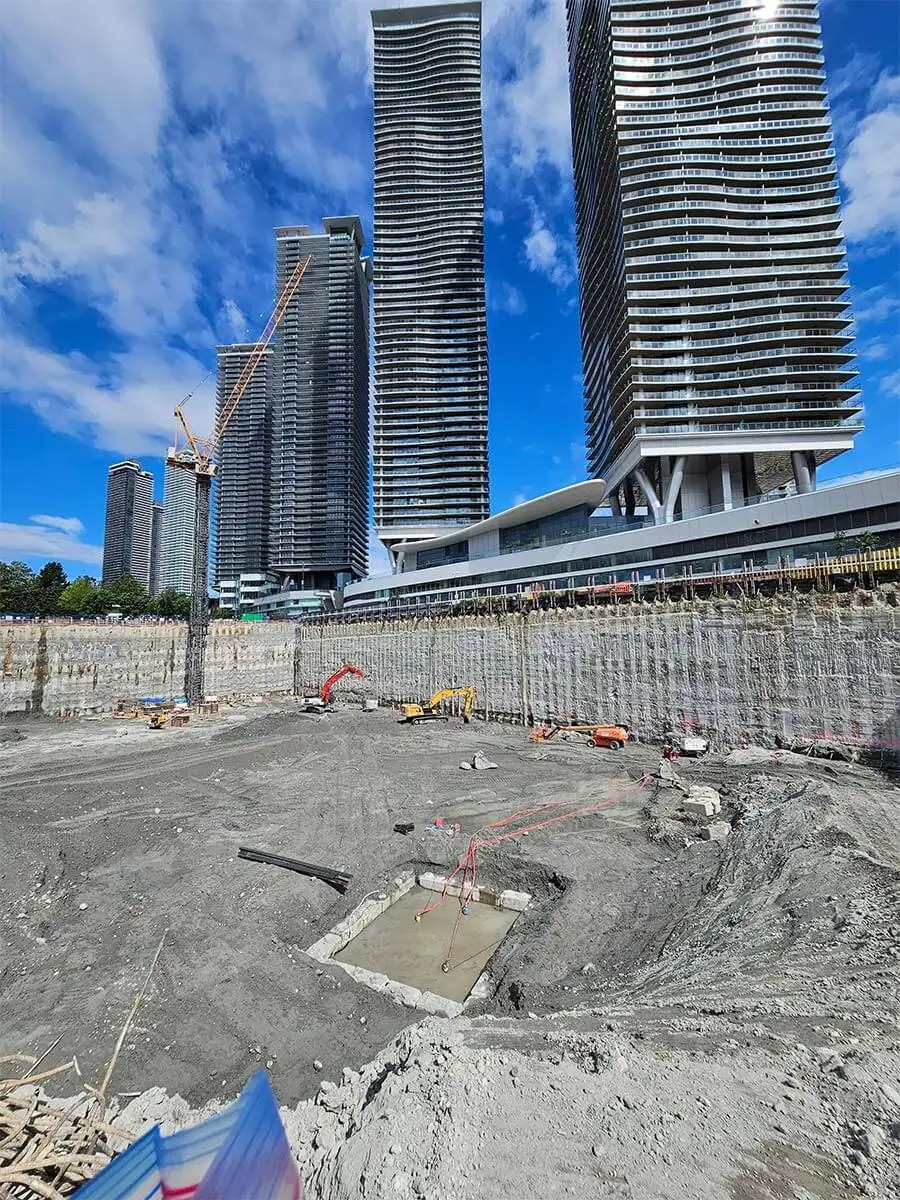
High-rise and commercial excavation for Matcon
Three urban jobs for Matcon: a deep excavation beside high-rise towers, a commercial dig next to an active rail line, and detailed excavation with a machine lowered in by crane.
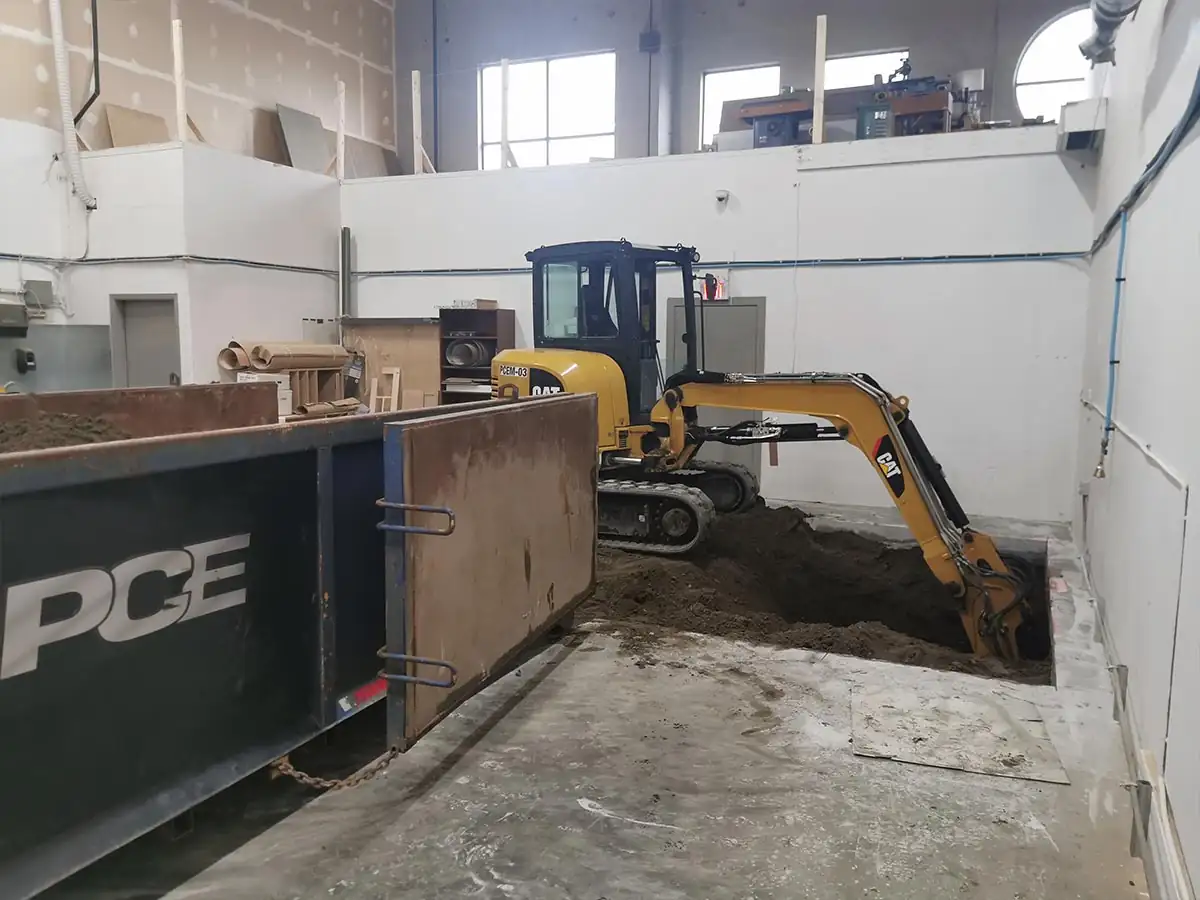
4 m deep excavation inside a building
For TriCity Plumbing: 4 m deep, inside a building, under the walls and between three separate units.
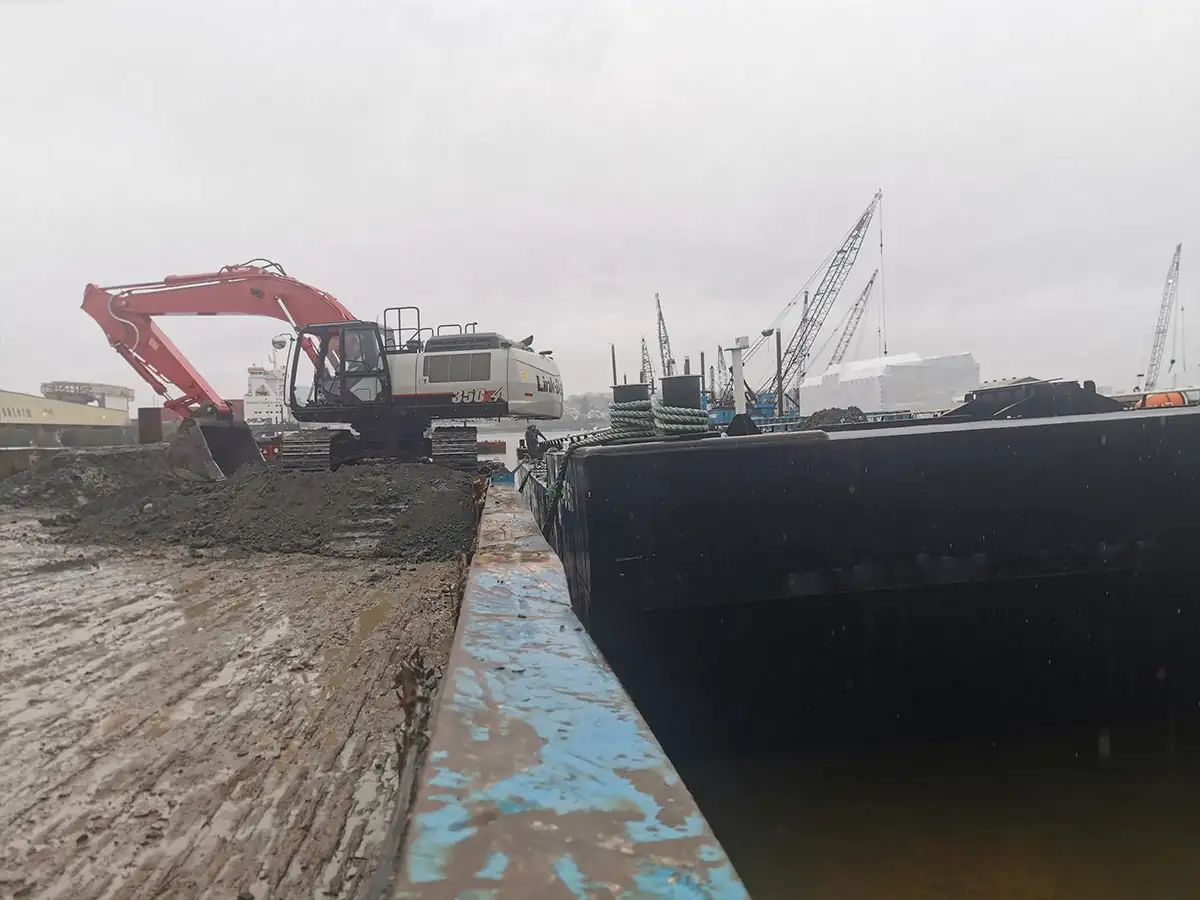
Ocean disposal facility operation
Running the barge-loading side of an ocean disposal facility for Matcon Excavation and Shoring: trucks in, material onto the barge, trucks out.
Got a big job coming up?
Tell us where it is, what needs to come out of the ground and when. We’ll tell you how we would do it.