
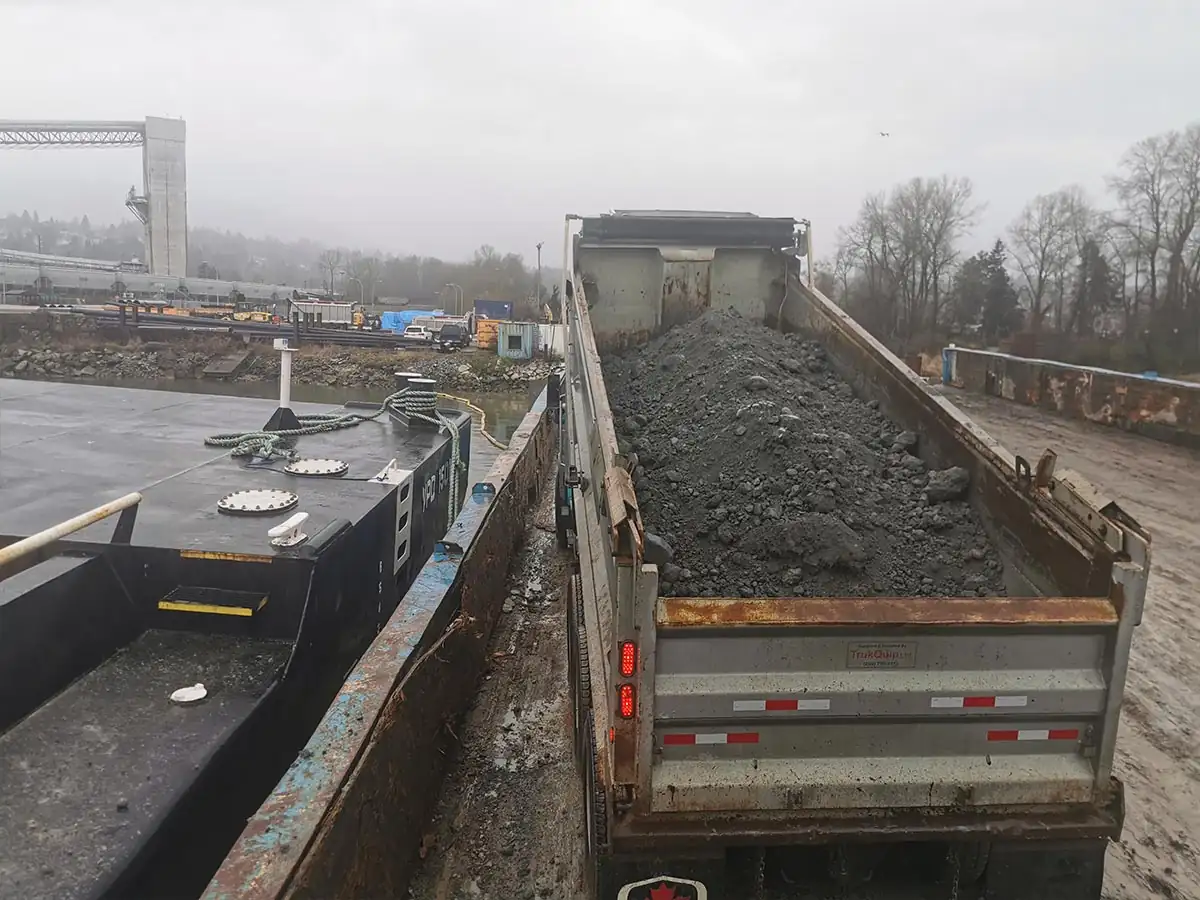
Soil and fill rules in BC: ALR, soil relocation and municipal permits
Every excavation creates soil that has to go somewhere, and many sites need fill brought in. Three layers of rules apply: the Agricultural Land Commission, the province’s soil relocation rules, and your municipality.
1. Fill and soil in the Agricultural Land Reserve
In the ALR you must not place fill on, or remove soil from, land without one of three things: a regulatory exemption, a Notice of Intent to the ALC’s CEO, or an approved soil or fill use application. The ALR Use Regulation took effect February 22, 2019.
After a complete Notice of Intent and fee are received, the CEO has 60 days to approve it or order that the work not proceed (the CEO may first ask for more information). Work must not have started.
The ALR Use Regulation (section 35) exempts some farm work, including fill or soil removal for farm buildings or a principal residence (500 m² floor area or less) up to 1,000 m² of total area including the driveway, and limited volumes for drainage, irrigation and farm road maintenance. Section 36 prohibits certain materials as fill, including construction and demolition waste, concrete, asphalt, drywall and treated wood.
The ALC takes general and soil and fill questions by email through its Burnaby office, with separate contacts for active Notices of Intent and for help with the ALC Portal.
2. Soil relocation (Contaminated Sites Regulation)
The soil relocation changes to the Environmental Management Act and Contaminated Sites Regulation came into effect on March 1, 2023.
A Soil Relocation Notification is required when soil leaves a site that has a current or former industrial or commercial use listed in Schedule 2 of the CSR. A qualified professional completes and submits it at least one week (and no more than two years) before the move. There is an exemption for less than 30 m³ per project, which does not apply to high-risk sites.
3. Municipal soil permits compared
Thresholds vary widely, and some municipalities require a permit for any amount. The table summarizes what each bylaw says; follow the link for the full text.
| Municipality | Bylaw | What it says |
|---|---|---|
| Township of Langley | Bylaw 4975 | Permit or exemption needed to deposit or remove soil. $250 application fee up to 600 m³, $500 above; $1/m³ volume fee; security $5/m³ ($1,000 minimum); certified reports above 600 m³. |
| Surrey | By-law 16389 | Outside ALR: under 15 m³ and under 0.5 m deep is exempt; 15–100 m³ (no deeper than 0.5 m, per 12 months) needs notice and written approval. In ALR: exempt under 100 m³, 1,000 m² and 0.10 m deep; where ALC approval is required, no permit without it. |
| Abbotsford | Bylaw 1228-2003 | Permit required to remove soil; no minimum volume. No removal on Sumas Mountain below 170 m elevation. |
| Maple Ridge | Bylaw 7412-2017 | Deposit permit with an exemption up to 25 m³ in 12 months; public notice above 350 m³; Council review at 20,000 m³. |
| Pitt Meadows | Bylaw 3000 | Permit, exemption or ALR compliance needed; applications include a drainage, erosion and sediment control plan. |
| Mission | Bylaw 6133-2022 | Permit needed; exemption up to 100 m³ per calendar year, not in the ALR without ALC approval. |
| Chilliwack | Bylaw 1313 | Permit required unless exempt; no minimum volume; $0.50 per m³. |
| Delta | Bylaw 7221 application form | Permit required before any soil is deposited or removed. |
| Burnaby | Soil Deposit Bylaw | Permit required for all soil deposition. |
| Richmond | Bylaw 10200 | Permit needed unless the activity qualifies for an exemption; ALR properties may need one. |
| Coquitlam | Soil Management | Permit triggers include changing the grade by more than 1 m. |
How PCE fits in
PCE supplies sand and gravel and handles soil disposal with full documentation, so the paper trail is there when the owner, the municipality or the environmental consultant asks for it.
Checked October 2026 against the sources linked on this page. Rules change, so confirm with the authority before work starts. General information only, not engineering or legal advice.
Got a big job coming up?
Tell us where it is, what needs to come out of the ground and when. We’ll tell you how we would do it.